

7 Proven Ways to Increase Brand Awareness at Trade Shows
Trade show floors are crowded, with hundreds of exhibitors competing for the same seconds of attention. From the moment attendees step into the hall, your presence should feel intentional and memorable. A well-planned trade show exhibition booth anchors that experience, technology, and human interaction into one brand story.
In-person events remain one of the most effective channels for building brand awareness, largely because they let prospects experience a product. The seven strategies below cover the physical design, the interactive elements, and the follow-through that together shape how attendees remember your brand once the show floor lights go down.
How to Build Brand Awareness at Trade Shows
Here are seven strategies to help your next exhibition investment pay off.
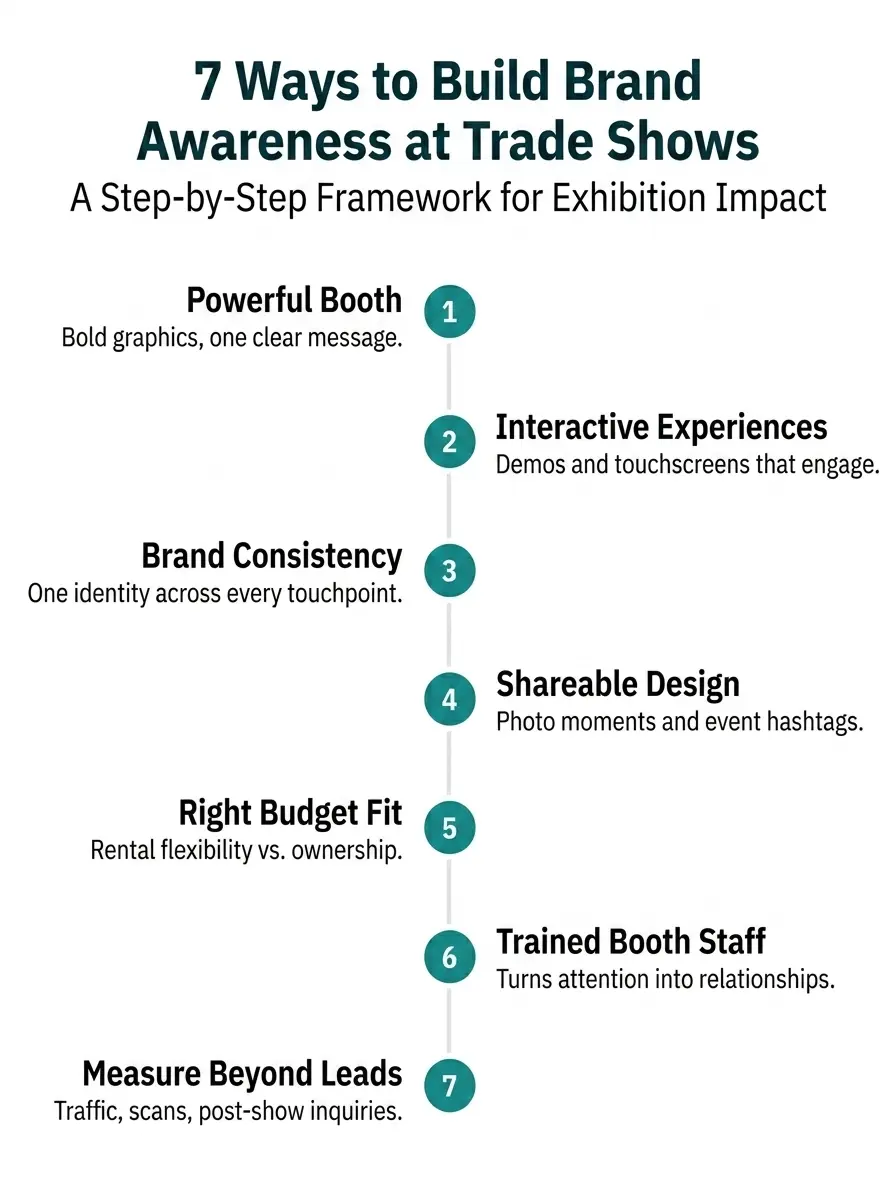
1. Create a Visually Powerful Booth -
Your booth is usually the first physical touchpoint attendees have with your company, so it needs to communicate who you are within seconds. Bold graphics, strategic lighting, recognizable colors, and tight messaging help you stand out on a crowded floor. Partnering with an experienced trade show booth design agency in USA can translate your brand personality into a strong visual concept, from the overall exhibition stand design down to smaller details like counters, signage, and flooring. Resist covering every wall with text one clear value proposition does more work than a dozen bullet points. Height, open sightlines, and a focal point visible from across the aisle also matter more than most exhibitors expect; attendees often decide whether to approach a booth before they're even close enough to read it.
2. Use Interactive Experiences -
Awareness grows faster when visitors participate instead of just observing. Product demos, touchscreens, quizzes, augmented reality features, and live presentations give people a reason to linger, and give your team a natural opening to talk. These moments turn an ordinary exhibit into something attendees remember afterward. The goal is relevance: every interaction should help a visitor understand your product, solve a real problem, or walk away having learned something useful. Even simple additions, like a live poll displayed on a screen or a short hands-on challenge tied to your product, can meaningfully lift booth traffic and dwell time compared to a booth that only hands out brochures.
3. Branding Consistency –
Consistency builds recognition. Your booth should feel like an extension of your website, ads, and social channels, with the same logo treatment, typography, colors, imagery, and tone of voice across every graphic and handout. A custom trade show booth gives you far more room to build that consistency into the physical space, instead of adapting your brand to a generic structure. When the environment, products, and audience all work together, attendees recognize you faster — and that recognition compounds. Someone who saw your booth this year is far more likely to stop by again next year if the visual identity has stayed familiar in the meantime.
Transform Your Exhibition Vision into Reality with a Free Booth Consultation.
4. Design for Social Media & Shareability -
Give visitors a reason to pull out their phones. Branded photo backdrops, live demos, interactive walls, and LED displays encourage people to capture and share their experience. Add your handles and any event hashtag somewhere visible so it's easy to tag you. Thoughtful booth design for trade shows accounts for both kinds of visibility — in person, and online through visitors' networks, where a single well-composed photo can reach far more people than walked past your booth that day. Consider building one specific "shareable moment" into the layout rather than hoping the whole booth photographs well; a single striking wall or display tends to outperform a booth that's visually busy everywhere
5. Choose the Right Booth Strategy for Your Budget -
Not every company needs a permanent structure. For businesses attending multiple shows or testing a new market, trade show booth rental offers a flexible, lower-commitment way to show up professionally. Portable trade show displays and modular rental systems can still include branded graphics, lighting, meeting space, and interactive features, without the storage and refurbishment costs that come with owning an exhibit outright. Either way, work with a trade show booth builder who understands your brand and can manage design, fabrication, logistics, and installation. An experienced exhibit design company will also know venue-specific requirements union labor rules, drayage costs, and fire-code restrictions vary by city and can catch first-time exhibitors off guard.
6. Invest in Well Trained Booth Staff -
No booth, however striking, builds brand awareness on its own. Your team represents the company throughout the event, so they need to know your message, products, and target audience. Train staff to approach visitors naturally, ask good questions, and guide qualified prospects to the right conversation, rather than reciting a script the moment someone makes eye contact. Coordinated apparel or subtle branded touches make your team easy to spot. The booth draws people in; an engaging team turns that attention into a lasting impression. It also helps to rotate staff through shifts — tired, hungry team members standing behind a table with their arms crossed can undo hours of careful booth design in seconds.
7. Track Brand Awareness Beyond Lead Counts -
Leads are only part of the picture. Booth traffic, quality conversations, demo requests, content engagement, QR-code scans, and website traffic during and after the show give a fuller view of your reach. Comparing engagement metrics before and after a major event can reveal patterns leads alone won't show, and they help justify the exhibit budget when it's time to plan for next year. A skilled trade show booth builder can design an exhibit that supports these interactions, and a professional booth design partner in USA keeps your presence aligned with broader marketing goals. Set a few simple benchmarks before the show social mentions, scan-to-visit ratios, follow-up meeting requests, so trade show ROI isn't measured by sales pipeline alone.
Conclusion
Trade shows give brands a rare chance to step outside digital impressions and build direct, memorable connections with the people who matter most. Real brand awareness takes more than an attractive exhibit it takes strategy, engagement, and measurement together. If you're preparing for a trade show in USA, thoughtful exhibit planning, from booth design through staff training to post-show tracking, recognition, and lasting relationships that continue well after the aisles have emptied out.
💬 Comments (0)
🙂 No comments yet — be the first to share your thoughts!