

CES 2027 Booth Strategy: How to Stand Out in Las Vegas (Jan 6–9), 2027
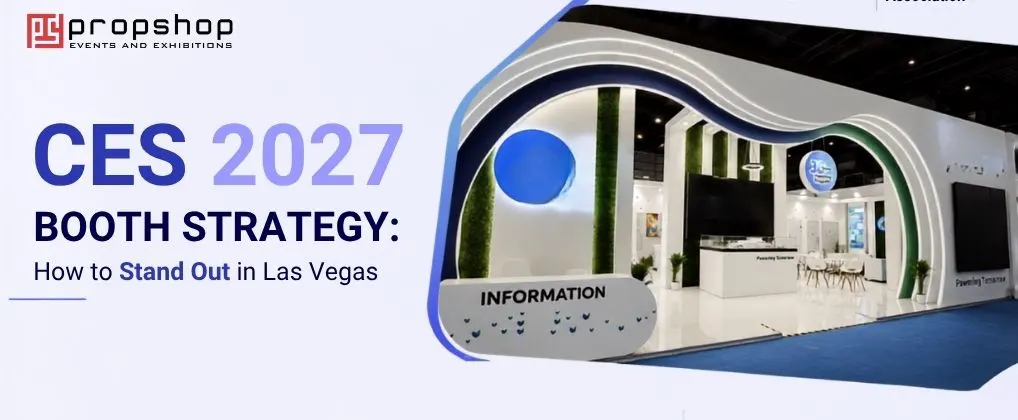
The Consumer Electronics Show CES 2027 is going to be held in Las Vegas from January 6–9, 2027 at the Las Vegas Convention Center. Your booth gets about three seconds to earn a second look before that attention moves on.
That's the real challenge here. It isn't a lack of good technology; everyone at CES has good technology. It's that good technology, badly presented, looks exactly like everyone else's. The booths that convert traffic into pipeline made a handful of deliberate decisions early, rather than patching a weak concept with more screens two weeks before move-in.
Why Your CES 2027 Booth Matters
CES is one of the world's most influential technology events, making it an important platform for companies looking to introduce products, build partnerships, and increase brand visibility. Visitors have limited time and many exhibits to explore. If your booth does not communicate a compelling message quickly, potential customers may simply walk past. The best trade show booth design agency in the USA can help transform your objectives into a booth environment that attracts attention.
Powerful Trade Show Booth Strategies to Capture Attention at CES 2027 in Las Vegas
Here are practical strategies to help your CES 2027 booth make a stronger impact:

Start With the One Sentence You Want People to Repeat
Before any conversation about layout or lighting, sit down and write one sentence: what should a visitor tell a colleague about your booth an hour after they've left it? Not your tagline. Not your elevator pitch. The thing they'd actually say out loud.
If you can't get to one sentence, your booth won't get there either. This is the step most teams skip, and it's the reason so many CES booths end up as a collage of everything the company does rather than a clear statement about the one thing worth remembering. A 20x20 island with five different messages competing for attention will lose to a 10x20 with one message, said clearly, three times.
Design for the Walk-By, Not the Walk-In
At CES, most people experience your booth from twenty feet away, moving at a normal walking pace, scanning for a reason to stop. That's a different design problem than decorating an interior. A common mistake is putting the most important information at eye level for someone standing inside the booth. By the time they're standing inside, they've already decided to stop. The job of your exterior graphics is to make that decision for them from a distance.
Stand Out from the Crowd — Unlock Your Free Exhibit Strategy Session
Let the Product Do the Talking
Nobody wants to be pitched to on a trade show floor. They want to try something, watch it work, or see a result they didn't expect. If your technology can be demonstrated - a live sensor reading, a working prototype, a before-and-after comparison, a configurator that spits out a real result in under a minute - build the booth around that demonstration and let staff facilitate rather than narrate.
The exhibitors that struggle most are usually the ones with genuinely strong technology that requires a five-minute explanation before it makes sense. If that's your situation, the fix isn't a longer script; it's finding the ten-second version of the demo that gets someone curious enough to ask for the five-minute version themselves.
Plan for Three Different Conversations, Not One
A CES booth typically has to host three very different interactions at once: someone doing a fast walk-by scan, someone genuinely trying the product, and someone who wants twenty uninterrupted minutes with your VP of Product. Trying to run all three in the same open space creates friction; the serious conversation gets interrupted by demo noise, and the demo area gets crowded by people who are really just there to sit down.
Separating these doesn't require a huge footprint. Even a modest booth benefits from a visible demo point near the aisle, a slightly enclosed area for hands-on interaction, and a small meeting space—even four chairs and a half-wall set back from the main flow can be enough. The goal is that each type of visitor knows where to go without being told.
Lighting Is Doing More Work Than You Think
Exhibitors often treat lighting as a finishing touch, added once the layout and graphics are locked. Even flat lighting makes everything in a booth look equally important, which in practice means nothing looks important. Directional and layered lighting—brighter on the hero product, dimmer on the walkways, and washing the branding wall—tells a visitor's eye where to go before they've consciously decided where to look. This matters even more at CES specifically, because the ambient light on a convention floor is already bright and mixed. A booth that doesn't create its own contrast tends to visually flatten into the noise around it.
Decide Early: Custom Build or Rental
This decision has more downstream effects than most teams expect. A custom exhibit gives you full control over structure and long-term reusability, but it comes with a longer lead time and higher upfront cost. A trade show booth rental, done well, with real customization rather than a stock kit, can deliver most of the visual impact at a fraction of the commitment. If you're only exhibiting once this cycle, a rental can free up budget for the parts of the show that generate meetings, travel, hosted dinners, and press outreach, rather than tying most of it up in a structure you'll use once.
Build in a Moment Worth a Photo
Attendees photograph what feels different, not what feels correct. A well-executed brand wall is expected. Genuinely unexpected visual moments—a striking architectural element, an unusual material, or a demo that produces a visible result on the spot—are what end up on someone's phone and, from there, in front of an audience that never set foot on the show floor.
Choosing the Right Partner Matters More at CES Than at Smaller Shows
CES compresses an unusual amount of complexity into a short window, multi-venue logistics, strict move-in and move-out windows, and a show floor where mistakes are hard to fix once doors open. Working with a trade show booth design agency in the USA that has actually built at CES before and understands its specific venue rules and timelines tends to prevent the kind of last-minute problems that don't show up until you're already on-site.
Conclusion
CES 2027 in Las Vegas will be a highly competitive environment where technology brands have only a limited window to capture attention. A successful booth needs to do more than showcase products, like demonstrating your innovation, engaging visitors, and supporting your business objectives.
From bold branding and interactive technology to comfortable meeting areas and intelligent lead capture, every element should have a purpose. With the right booth design for trade shows and an experienced exhibit partner, your brand can create a powerful presence at CES 2027 and make every visitor interaction count.
💬 Comments (0)
🙂 No comments yet — be the first to share your thoughts!