


First-Time Exhibitor? The Complete 2026 Guide to Trade Show Success
Exhibiting at a trade show for the first time can be exciting and overwhelming. From selecting the right event and setting a realistic budget to designing your booth, training your team, attracting visitors, and following up with leads, every decision shapes your results.
For US businesses, trade shows remain a valuable opportunity to build brand awareness, demonstrate products, and create face-to-face connections with buyers. However, success does not happen simply because you reserve booth space; it requires a strategy that connects pre-show marketing, exhibit design, on-site experience, and post-show follow-up into one well-planned USA trade show program.
Complete Guide to Trade Show Success for First-Time Exhibitors
This 2026 guide will help you build a stronger plan for your first trade show:

1. Define Your Trade Show Goals First
Before discussing booth design, determine what you want to achieve. Your goals might include generating qualified leads, launching a product, increasing brand awareness, meeting distributors, or entering a new market. Your objectives should guide your booth layout, messaging, staffing, promotional strategy, and lead-capture process.
2. Select the Right Trade Show
Research the show's audience, industry relevance, attendee demographics, and historical performance. Consider whether the event attracts the decision-makers and prospects your company actually wants to reach. Understand booth regulations, installation schedules, shipping deadlines, labor rules, and venue policies. The right event can put your brand in front of highly relevant prospects.
3. Create a Complete Exhibition Budget
Your booth space is only one part of the total investment. For first-time exhibitors, a trade show booth rental can provide greater financial flexibility than purchasing a permanent exhibit. Rental solutions can deliver a professional appearance while reducing storage and long-term ownership responsibilities.
4. Choose a Booth Size That Fits Your Goals
Your exhibit has only a few seconds to make an impression, so choosing the right booth size is essential. A 10 x 10 trade show booth can work well for first-time exhibitors or brands with a focused product display, while a 20 x 20 trade show booth provides more space for product showcases, interactive experiences, meeting areas, and demonstrations. Regardless of size, your booth should immediately communicate who you are, what you offer, and why attendees should stop. Keep messaging concise and visible from the aisle, supported by strong branding, large headlines, compelling visuals, strategic lighting, and clear calls to action.
Your Successful Exhibition Starts Here. Get a Free Booth Assessment Today.
5. Design for Attention and Engagement
Your exhibit has only a few seconds to make an impression. A strong trade show exhibition booth should immediately communicate who you are, what you offer, and why attendees should stop. Keep your messaging concise and visible from the aisle. Use strong brand elements, large headlines, compelling visuals, strategic lighting, and clear calls to action. The design can incorporate your brand identity, products, customer experience, and specific event objectives into one cohesive environment.
6. Work With the Right Exhibit Partner
Designing and executing an exhibit involves many moving parts. You may need creative design, 3D visualization, fabrication, shipping, installation, dismantling, and project management. An experienced trade show booth builder can coordinate these elements and help turn your concept into a functional exhibit. Ask about fabrication capabilities, project management, installation support, materials, timelines, and what is included in the proposal.
7. Make the Visitor Experience the Priority
Your booth should not simply look attractive; it should give visitors a reason to interact. Depending on your industry, you could include interactive displays, touchscreens, product samples, educational presentations, virtual experiences, expert consultations, and private meeting areas. Think about the journey from the aisle to the conversation. What attracts the visitor? What captures their interest? Where does the sales conversation happen? How is their information collected?
8. Promote Your Booth Before the Event
One of the most common mistakes first-time exhibitors make is relying entirely on event foot traffic. Start promoting your participation well before the show. Use email campaigns, LinkedIn, social media, paid advertising, customer invitations, website content, and partner promotions. Promote a product launch, a live demonstration, an expert presentation, an exclusive offer, or a scheduled consultation. Pre-show marketing helps turn your booth from a passive destination into a planned meeting point.
9. Train Your Booth Staff
Your staff can make or break the visitor experience. Before the show, train your team on key product messages, qualification, product demonstrations, meeting handoffs, and follow-up expectations. Avoid having employees sit behind counters, stare at phones, or talk only with coworkers.
10. Consider the Benefits of Booth Rental
A trade show booth rental can be particularly useful for first-time exhibitors, companies testing a new market, or brands participating in multiple events with different booth requirements. Rental exhibits can offer flexibility in booth size, graphics, configurations, furniture, lighting, and branding.
Avoid Common First-Time Exhibitor Mistakes
Several mistakes can reduce trade show ROI:
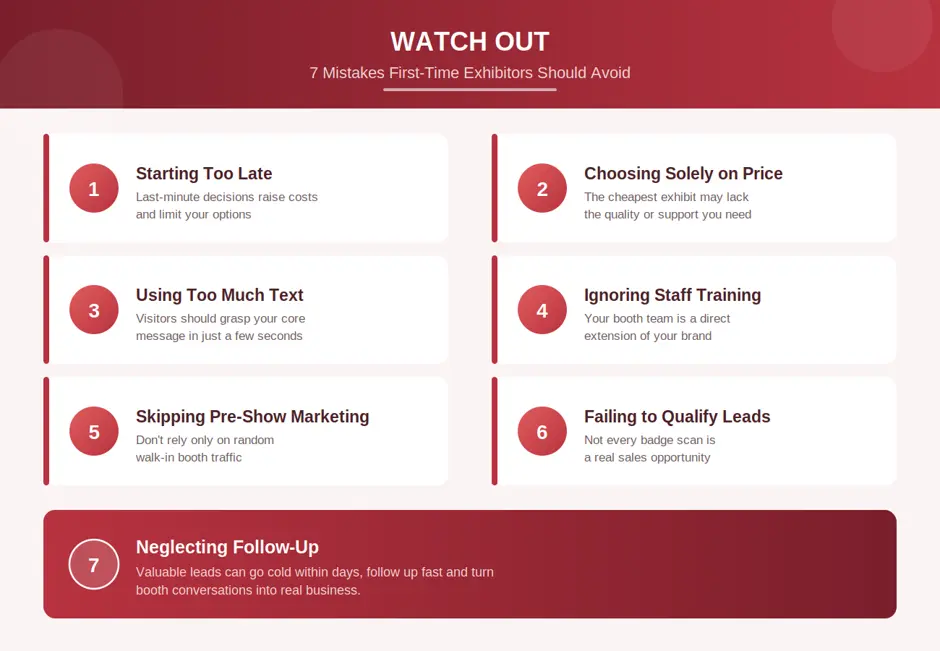
- Starting the Planning Too Late: Last-minute decisions often increase costs and limit options.
- Choosing a Booth Based Only on Price: The cheapest exhibit may not provide the quality or support you need.
- Overloading the Booth With Information: Visitors should understand your core message quickly.
- Failing to Prepare Booth Staff: Your team is an extension of your brand.
- Skipping pre-show marketing: Don't rely entirely on random booth traffic.
- Failing to qualify leads: Not every badge scan represents a sales opportunity.
- Neglecting Post-Show Follow-Up: Valuable leads can go cold quickly without timely communication.
Conclusion
With clear objectives, careful budgeting, strategic marketing, effective booth design, trained staff, and disciplined follow-up, you can turn your first exhibition into a valuable business-development opportunity. Whether you're starting with a 10 x 10 trade show booth or planning a large-scale exhibit, focus on creating an experience that attracts the right audience.
The most successful exhibitors don't simply show up; they plan every stage of the experience. With the right strategy and the support of an experienced trade show booth builder, your first exhibition can become the foundation for a repeatable and profitable trade show program in 2026 and beyond.
💬 Comments (0)
🙂 No comments yet — be the first to share your thoughts!