


How to Choose the Right Trade Show Booth Builder in the USA in 2026
Choosing a trade show booth builder in the USA is not a matter of design or fabrication alone. It is about regulatory understanding, cost control, engineering discipline, and reliable execution. Whether you are a seasoned U.S. exhibitor or entering the American market for the first time, this guide outlines what truly matters before you finalize a trade show booth builder in the USA.
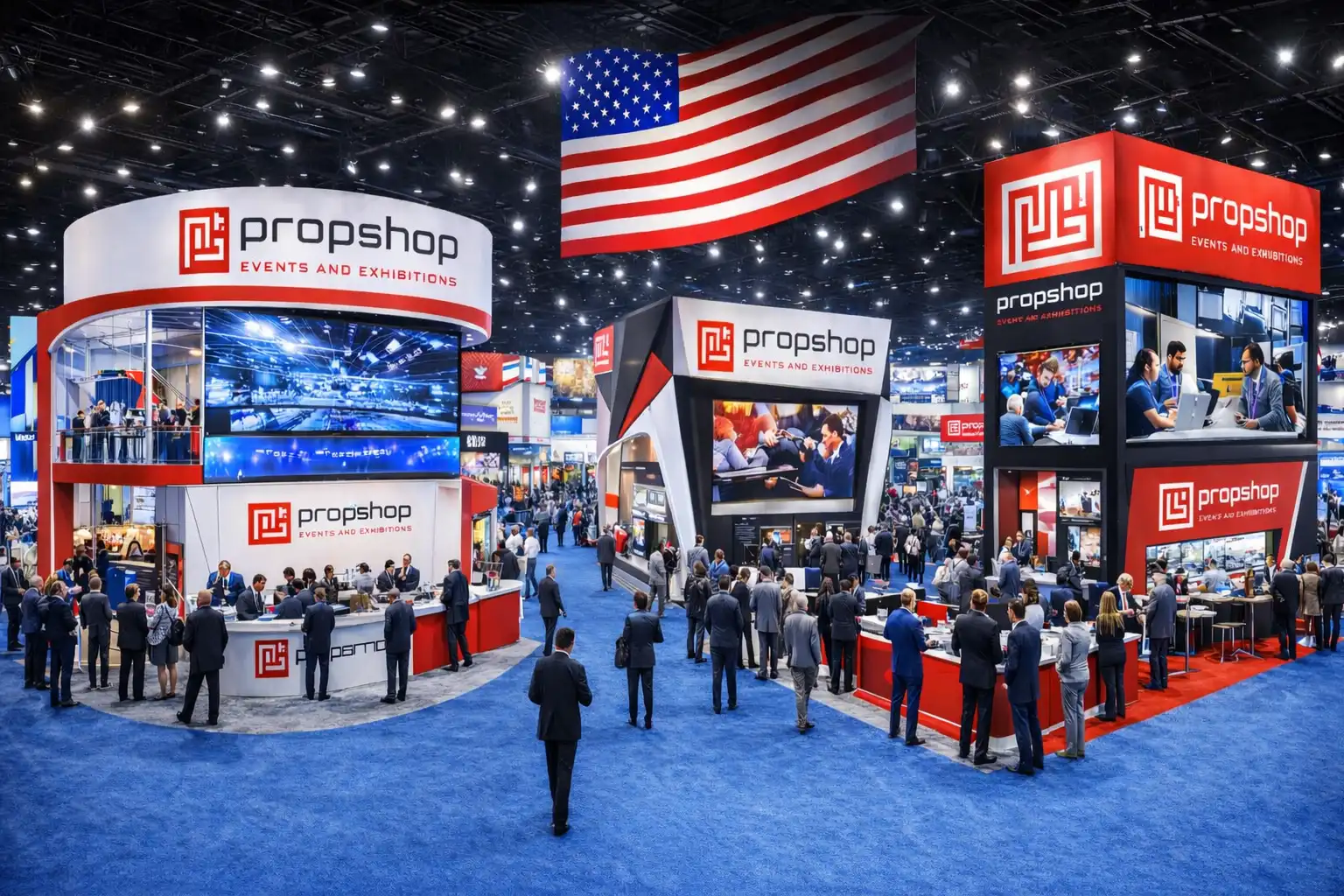
Understanding the Operational Reality of Trade Show Exhibits in the U.S.
The U.S. exhibition market is structured, regulated, and operationally demanding. Installation and dismantling are characterized by compressed schedules, union labor jurisdictions, material handling fees, and strict venue compliance. Execution errors are rarely forgiven.
Major venues such as the Las Vegas Convention Center, Jacob K. Javits Convention Center, George R. Brown Convention Center and McCormick Place operate under established labor and safety systems.
Exhibitors must navigate:
- Union labor rules and jurisdiction boundaries
- Weight-based charges (drayage and material handling)
- Approvals for rigging suspended signage
- Fire safety and structural compliance
- Limited move-in and dismantle windows
For companies participating regularly in U.S. trade show exhibits, these realities are familiar. For international brands, they can significantly impact cost and planning. The right trade show management company understands how to operate within this framework not work around it.
U.S.-Specific Experience Matters
Global presence does not automatically translate into local execution strength.
A competent USA trade show booth builder should demonstrate proven experience across major Trade Show Cities and union-controlled environments. This includes established freight relationships, familiarity with venue documentation, and a practical understanding of how American labor systems function during the installation of large-scale trade show exhibits.
For multi-city exhibitors, this ensures continuity. For first-time exhibitors, it eliminates unnecessary learning curves.
The U.S. trade show ecosystem is distinct. Experience directly reduces operational risk.
Engineering Depth Behind Trade Show Booth Design Services
In 2026, a booth is more than an advertising display. It is a built environment that must attract, engage, and function within structural parameters. Strong trade show booth design services combine marketing clarity with technical precision.
Look for contractors that provide:
- Concept development aligned with brand strategy
- Detailed 3D visualization
- Technical and structural drafting
- Material specification and optimization
- Integration of LED walls, AV systems, and interactive technology
Engineering validation becomes essential, particularly for island booths (20' x 20' and larger), where height limits, hanging signs, and load calculations require approval.
Creativity draws attention. Buildability ensures performance of booth designs for trade shows.
The Role of a Trade Show Management Company in Execution Control
Trade shows in the U.S. operate on rigid timelines. Delayed coordination or incomplete approvals quickly convert into overtime labor and budget pressure.
A reliable trade show management company should present a clear execution structure that includes:
- A dedicated project manager
- Milestone-based approval timelines
- Active budget scope monitoring
- Direct coordination with show management
- On-site supervision during build and dismantle
Predictability is generated through organized supervision, particularly for exhibitors managing multiple trade show exhibits annually. For global brands, structured oversight builds confidence in unfamiliar operational environments.
Strong project management protects your investment as much as quality booth design does.
Transparent Cost Structuring in the U.S. Market
The American exhibition market requires cost transparency. Fabrication is only one component of total investment. Additional charges typically include:
- Material handling fees that are calculated by weight
- Union labor and supervision charges
- Rigging services
- Electrical and internet provisioning
- Overtime installation rates
A trustworthy trade show booth builder provides itemized costing from the outset, ensuring clarity when building a trade show booth. This transparency enables strategic budget planning and helps prevent mid-project cost escalation.
Aggressive quoting often leads to later scope expansion. Stability should be prioritized over initial price compression.
Logistics and Reusable Strategies for Trade Show Exhibits
Brands exhibiting in multiple U.S. cities benefit from long-term booth strategy rather than one-time fabrication.
Common U.S. booth formats include:
- 10' x 10' inline
- 10' x 20' inline
- 20' x 20' island
- 30' x 30' and larger custom footprints
A strategic trade show booth builder evaluates whether modular components within booth designs for trade shows can be reused or reconfigured across these formats.
Logistics capability should include:
- Nationwide freight coordination
- Secure warehouse storage
- Multi-show calendar planning
- Between-show refurbishment and graphic updates
This approach increases cost efficiency while maintaining consistency across trade show exhibits.
Reviewing a Portfolio Through an Execution Lens
Strong visuals alone do not confirm operational capability.
When assessing previous trade show exhibits, evaluate:
- Structural detailing and material quality
- Integration of technology
- Design adaptability across booth sizes
- Industry diversity
- Installation reliability under compressed schedules
Ask how last-minute challenges were managed. Understand how union coordination was handled. Portfolio evaluation should prioritize execution outcomes, not just aesthetics of booth designs for trade shows.
Compliance, Documentation, and Risk Preparedness
U.S. exhibitions demand documentation discipline.
Your trade show management company should provide:
- Appropriate insurance coverage
- Structural certifications where required
- Fire safety compliance documentation
- Defined change management processes
- On-site contingency measures
In regulated venues, minor oversights can delay installation or increase cost exposure. A defined risk management framework distinguishes experienced booth contractors from basic fabricators.
Early Planning for Custom Trade Show Exhibits in 2026
Early engagement consistently produces stronger outcomes.
Custom trade show exhibits often require five to seven months of development. Larger structures or technology-intensive builds may require additional time.
Beginning early allows:
- Greater creative flexibility
- Optimized material sourcing
- Secured union labor scheduling
- Reduced cost pressure
- Better strategic positioning
Delays reduce options. Early planning improves control and execution certainty.
Final Considerations for Exhibitors in 2026
The American trade show environment continues to expand in complexity, regulation, and expectation. Successful exhibitors are not defined by size, but by structured execution.
Selecting the right trade show booth builder in the USA ensures:
- Regulatory compliance
- Budget stability
- Timeline precision
- Engineering integrity
- Consistent brand presentation across markets
For established U.S. exhibitors, this strengthens efficiency. For domestic first-time brands and international participants, it reduces uncertainty, safeguards investment, and supports stronger trade show lead generation.
In 2026, choosing a booth contractor is not a transactional decision. It is a strategic commitment to the long-term performance of your trade show exhibits within one of the world's most structured exhibition markets.