

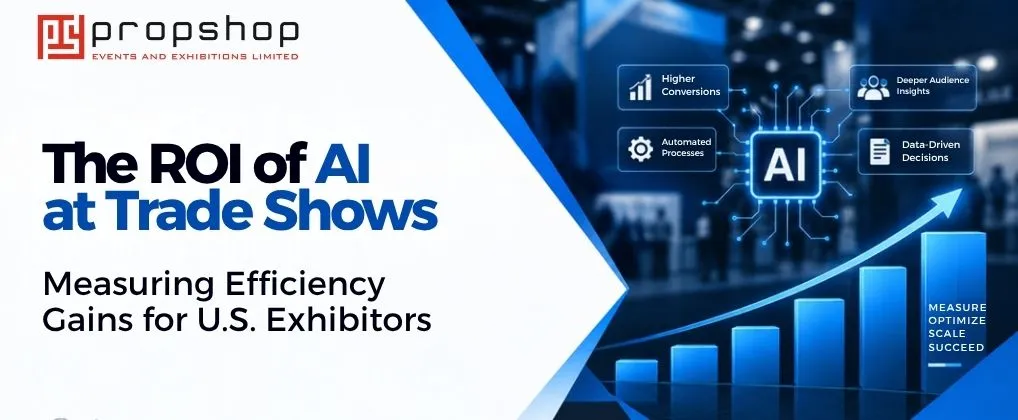
The ROI of AI at Trade Shows: Measuring Efficiency Gains for U.S. Exhibitors
Trade shows are a major investment for businesses across the United States. From venue fees and travel expenses to booth construction, marketing campaigns, and staffing, exhibitors commit significant resources to create a successful event presence. But how much value does that investment actually generate?
Artificial intelligence (AI) is changing how U.S. trade shows are planned, delivered, and measured. Rather than relying solely on attendance figures or the number of leads collected, and exhibitors can now use AI-powered tools to identify efficiency gains, understand visitor behaviour, improve follow-up, and measure the commercial impact of their participation. For businesses investing in a trade show in the USA, understanding the ROI of AI is no longer just about adopting new technology.
What Does AI ROI Mean at Trade Shows?
AI ROI refers to the measurable value generated through artificial intelligence compared with the cost of implementing and using it.
A simple way to calculate financial ROI is:
AI ROI (%) = (Financial Gains − AI Investment) ÷ AI Investment × 100
However, not every benefit appears immediately as revenue. AI can also reduce the time spent on administrative work, improve the accuracy of lead data, reduce staffing pressure, and help teams make faster decisions. For trade show exhibitors, the most useful approach is to measure both financial returns and operational efficiency.
Different Ways of Measuring ROI with AI Efficiency
Here are several ways to measure ROI with AI efficiency for exhibitors:
1. Measuring AI ROI for Trade Show Exhibitors
For exhibitors, the biggest opportunity is often improving the journey from visitor attraction to qualified sales opportunity.
Smarter Lead Capture and Qualification
Collecting hundreds of contacts does not automatically mean an exhibition was successful. The real value lies in identifying which visitors have genuine buying potential and ensuring that the sales team follows up appropriately.
AI-powered lead capture tools can help classify leads based on information such as:
- Visitor interests and product requirements.
- Purchase timelines.
- Questions asked during booth conversations.
- Follow-up preferences and sales readiness.
For instance, an exhibitor may collect 300 leads at a trade show. AI can help categorise those contacts into high-priority prospects, potential future buyers, and general enquiries. This allows sales teams to focus their time where it is most useful.
Personalised Follow-Up That Improves Conversion
A common challenge after a trade show is the delay between collecting a lead and contacting the prospect. When follow-up takes too long, potential opportunities may lose momentum. AI can assist with drafting personalised emails, organising CRM records, recommending follow-up sequences, and identifying leads that need immediate attention.
Useful metrics include:
- Average lead response time.
- Number of qualified meetings booked.
- Sales opportunities created.
- Conversion from qualified lead to customer.
2. How AI Supports More Efficient Booth Investments
AI can also influence the way exhibitors plan and deliver their physical exhibition spaces. A well-planned trade show booth design can help businesses attract visitors, communicate their value proposition, and support productive conversations. AI tools may assist with concept development, visitor-flow analysis, content planning, and the organisation of product information.
AI and Custom Booth Planning
Businesses investing in a trade show booth rental may use AI-assisted planning tools to compare layouts, estimate space requirements, and identify opportunities to improve visitor movement. Similarly, a trade show booth design agency in the USA can use AI-supported workflows to help clients explore design concepts, organise brand messaging, and prepare content for review.
Modular Displays and Reusable Assets
AI can also support planning for modular trade show displays by helping exhibitors organise reusable graphics, product messaging, and layout variations across multiple events. For businesses attending several shows throughout the year, reusing suitable booth elements may reduce the need to develop everything from scratch. Likewise, turnkey exhibits providers can use AI-assisted project workflows to organise schedules, design reviews, production information, and client communication.
Transform Your Exhibition Vision into Reality with a Booth Consultation
3. Interactive Technology: Measuring Engagement Beyond Footfall
Attracting visitors is important, but meaningful engagement is what creates business opportunities. Interactive booth technology can help exhibitors create more engaging experiences through product demonstrations, touchscreens, digital presentations, interactive questionnaires, and guided content.
The effectiveness of interactive experiences should be measured through:
- Number of interactions.
- Average engagement time.
- Product demonstrations completed.
- Qualified leads generated.
High engagement numbers alone do not guarantee ROI. A successful experience should connect visitor activity with a meaningful business outcome.
4. The Future of AI at U.S. Trade Shows
AI is likely to become increasingly integrated into event operations, exhibitor marketing, and post-show sales processes. Exhibitors may use it to create more relevant experiences, improve lead qualification, and measure the performance of their booth investments. The future of successful exhibiting will not be defined by technology alone. It will depend on how effectively businesses combine AI with strong strategy, compelling design, trained staff, and reliable sales processes.
Conclusion
The ROI of AI at trade shows is about more than automation. It is about improving efficiency, reducing unnecessary costs, and creating stronger connections between event participation and business growth. For exhibitors, it can improve lead capture, personalised follow-up, and the performance of their exhibition presence.
Partnering with Propshop trade show booth builder can help bring together creative design, practical execution, and technology-led engagement. When AI is used with clear objectives and measurable outcomes, trade shows can become more efficient, more engaging, and more accountable business growth opportunities.
💬 Comments (0)
🙂 No comments yet — be the first to share your thoughts!