



Trade Show Booth Logistics & Installation Guide in the USA
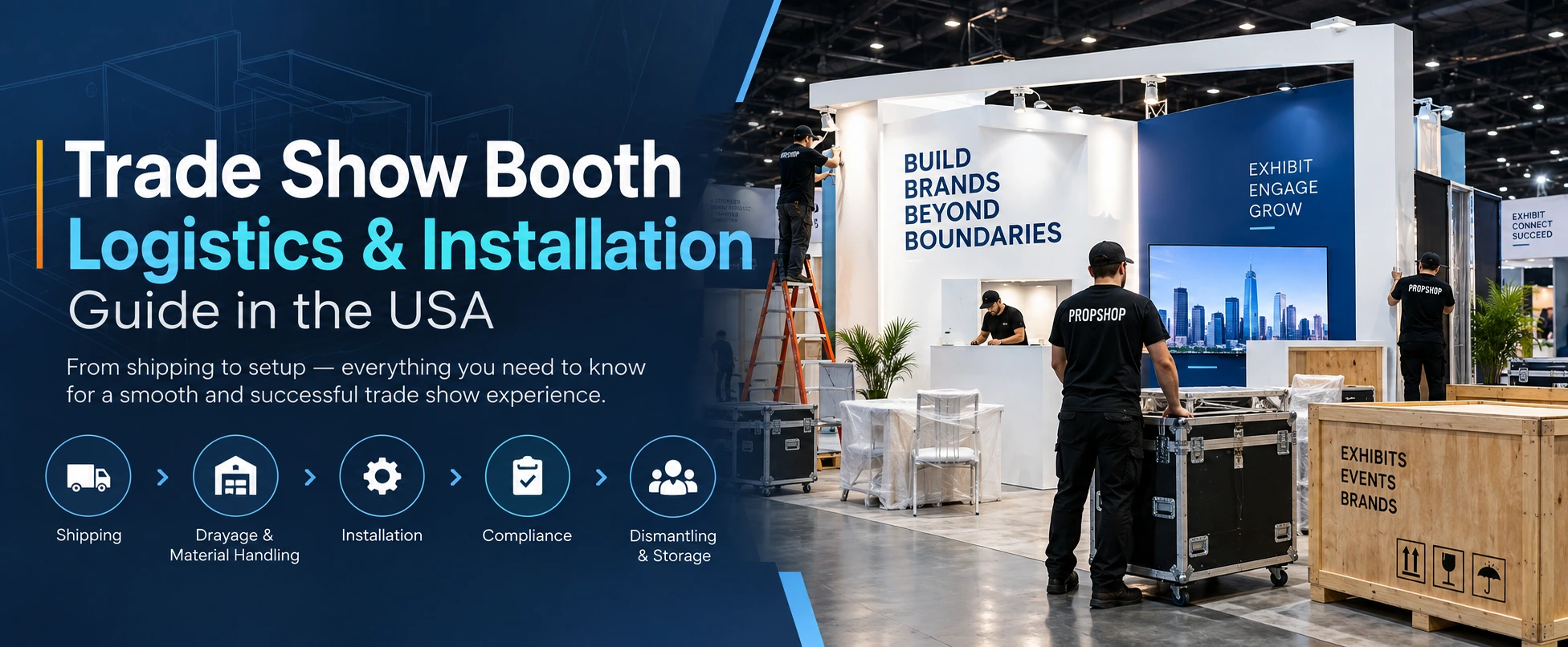
A successful exhibition presence is about more than an impressive booth. Behind every polished display at a trade show in the USA is a carefully coordinated logistics and installation process that ensures the booth arrives on time, complies with venue requirements, and is ready for visitors. Every stage in the booth logistics can involve multiple vendors and venue regulations.
Even a small oversight can lead to delays, unexpected costs, or a booth that is not ready for opening day. Whether you are exhibiting at a major industry convention or a regional expo, understanding the logistics and installation process can help you control costs, reduce stress, and deliver a professional brand experience.
Why Trade Show Booth Logistics Matter
Trade show logistics connect your booth design to its physical execution. A great concept is only valuable when every component reaches the venue in the right condition and is installed correctly.
A typical logistics plan may cover:
- Booth material transportation
- Material handling and drayage
Delivery scheduling
Storage and inventory management
Installation and dismantling
Venue and show-floor compliance
Return shipping or post-show storage
Working with an experienced trade show booth builder can simplify these moving parts by coordinating the process from production through installation.
What Steps Are Followed For Logistics & Installation in Trade Show Booth Building In The USA?
Here are some steps followed for the logistics & installation process:
H3: Step 1: Start Logistics Planning Early
One of the biggest mistakes exhibitors make is treating logistics as a last-minute task. Your logistics plan should begin as soon as the booth concept and footprint are confirmed. Start by reviewing the event's exhibitor manual, move-in schedule, labor rules, booth specifications, and venue requirements.
Early planning also gives your team time to determine:
- What needs to be shipped
- How many shipments are required
- Which items require special handling
- When installation labor must be scheduled
- How materials will be transported after the event
For companies using trade show booth rental, early coordination is equally important. Rental components may need to be transported from another event.
Step 2: Understand Advance Warehouse vs Direct-to-Show Shipping
US trade shows commonly provide different shipping options, with advance warehouse and direct-to-show delivery being two important methods.
- Advance warehouse shipping allows booth materials to arrive at an official warehouse before the event. This can provide greater flexibility because materials are received and held before the targeted move-in period.
- Direct-to-show shipping sends materials directly to the convention center or exhibition venue during a designated delivery window. The right option depends on the event schedule, booth size, shipment volume and logistics strategy.
Don’t Leave Your Booth Success to Chance
Step 3: Prepare a Detailed Shipping and Inventory Plan
Before shipping, create an inventory of every booth component. This should include structural elements, graphics, lighting, promotional materials, and other accessories. Labeling every case or package makes on-site identification much easier.
Your inventory should ideally record:
- Package or crate number
- Dimensions and weight
- Handling requirements
- Return instructions
For larger exhibits, separating components into clearly labelled cases can help the installation crew identify what needs to be assembled first and reduce unnecessary handling on the show floor.
Step 4: Schedule Professional Installation
Once materials arrive, installation turns the design into a finished exhibit.
Professional installation may include:
- Unpacking and inventory verification
- Structural assembly
- Flooring installation
- Furniture positioning
- Lighting and electrical coordination
- Final cleaning and inspection
Installation should be scheduled with sufficient time for troubleshooting. Rushing the final setup can lead to visible defects, incomplete technology connections or safety issues. A dedicated project manager can coordinate the installation crew and communicate with the venue, show contractor and other service providers.
Step 5: Conduct a Final Booth Inspection
Before the exhibition opens, conduct a complete inspection of the booth.
Check that:
- Graphics are correctly positioned
- Branding is consistent
- Lighting is working
- Furniture is correctly arranged
- Product displays are complete
- Meeting areas are clean and accessible
- The booth meets show and venue requirements
This final walkthrough provides an opportunity to correct issues before visitors arrive. For brands working with a trade show booth design agency in the USA, a pre-build review can be particularly useful. Reviewing the booth before shipment allows teams to identify potential construction, or design issues before they become expensive on-site problems.
Step 6: Plan Dismantling Before the Show Begins
Dismantling should be considered during the initial planning stage, not after the exhibition ends. Once the show closes, the installation team typically reverses the process by dismantling structures, removing graphics, packing components, and preparing materials for storage or return shipment.
Your team should know in advance:
- What will be reused
- What will be discarded or recycled
- What will return to your office
- Where return shipments are going
- When materials must be removed from the venue
Choosing the Right Trade Show Booth Partner
The right partner can make the difference between a stressful exhibition and a smooth, well-managed experience. Look for a trade show booth rental or custom booth provider that offers more than attractive designs. Ask about in-house fabrication, project management, shipping coordination, installation teams, dismantling, storage, and on-site support. Experience with US convention centers and show contractors is another important consideration. A reliable trade show booth builder should be able to explain the complete process clearly, identify potential logistical challenges early, and provide a realistic project timeline.
Conclusion
Trade show logistics and installation are the operational foundation behind a successful exhibition presence. When logistics are integrated into the creative process, exhibitors can create booths that are not only visually impressive but also practical to transport. Whether you are planning a small regional event or a large-scale trade show in the USA, start your logistics planning early, understand venue requirements, build realistic timelines, and partner with experienced professionals. A well-managed exhibition booth does more than look ready for opening day, it ensures your team is ready to engage visitors, showcase your products, and make every opportunity on the show floor count. Propshop is a professional trade show builder that can help you build a custom trade show booth with a smooth logistics and installation process.