


Experiential Marketing at Trade Shows: USA Trends & Examples
Over two decades in the trade show trenches from CES in Vegas to NAB Show reveal one truth: trade show marketing has evolved. Static setups and generic displays no longer cut it. In crowded venues, a well-executed trade show exhibition booth that delivers an experience stands out and builds real connections.
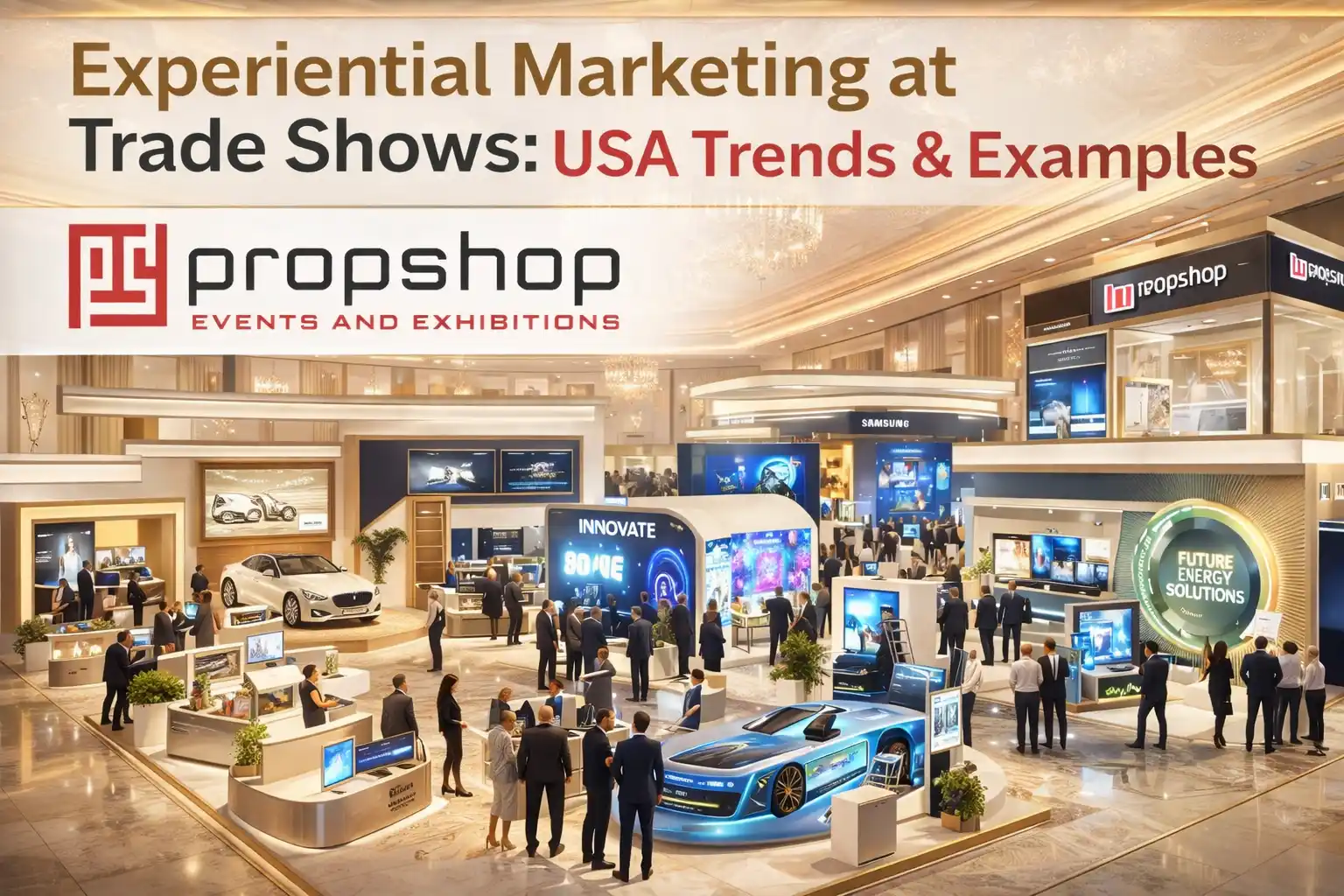
Experiential Edge in Trade Show Marketing
Large venues are often packed with similar trade show exhibits that blur together.
Handshakes and brochures fade quickly but immersive interactions don’t. People retain far more from experiences than passive viewing.
That’s why brands are shifting toward strategic trade show booth design, working with experienced trade show booth builders USA to create engaging environments instead of static displays.
Current USA Trade Show Marketing Trends
Across every major trade show in USA, the focus has shifted toward personalization and technology-driven engagement:
Compact setups like a 10 x 10 trade show booth now deliver immersive demos.
Eco-conscious trade show fabrication using reusable materials.
Data-driven journeys inside a custom trade show booth tailored to attendee profiles.
Interactive moments designed for social sharing and quick engagement.
These trends are shaping how modern trade show companies approach booth strtegy and execution.
Real Examples of Experiential Marketing
A high-energy simulator inside a custom exhibit booth recreated a freefall experience.
Result: Increased engagement and stronger lead quality.
An interactive creative space showcased innovation through hands-on participation.
Result: Higher conversions and extended booth dwell time.
A futuristic workspace concept demonstrated advanced collaboration tools.
Result: Strong appeal among senior decision-makers.
Benefits for Brands
Investing in experiential strategies delivers measurable outcomes:
Visitors spend more time in thoughtfully designed environments.
Memorable interactions increase post-event brand recognition.
Natural engagement improves qualification.
Lower cost per lead compared to traditional setups.
This is why many brands now prefer flexible solutions like trade show booth rental or custom trade show exhibit rentals.
Common Mistakes to Avoid in Experiential Trade Show Marketing
Pitfalls trip up even veterans:
Overcomplication: Glitchy VR at CES cleared lines fast.
Flow Neglect: Tight spaces without mapped journeys stall momentum.
Staff Gaps: Untrained teams waste tech's shine.
Inclusivity Oversights: Missing opt-outs alienates crowds.
Planning fixes these.
What’s Next for Experiential Trade Shows in the USA
Looking ahead, innovation will continue shaping the industry:
- AI-driven personalization: Tailoring attendee journeys in real-time.
- Multi-sensory environments: Engaging sight, sound, and touch for deeper immersion.
- Sustainable booth construction standards: A shift toward zero-waste and eco-friendly materials.
- Increased reliance on hybrid and modular solutions: Combining physical presence with digital flexibility.
Brands will increasingly collaborate with full-service trade show management company partners to maximize efficiency and ROI.
FAQ: Key Questions on Exhibition Technology
1. What is experiential marketing at trade shows?
Interactive, sense-engaging brand encounters that make booths destinations.
2. How does experiential marketing improve trade show marketing ROI?
Longer dwell, better leads, organic shares yield 2-4x conversions over static setups.
3. What are common pitfalls in experiential trade show marketing?
Complex tech, poor prep, flow ignores, all solvable with planning.
Wrapping It Up: Elevate Trade Show Impact
Trade shows demand evolution beyond booths. Experiences outlast ads, drawing savvy decision-makers.
Embrace experiential trade show marketing for lasting buzz.
The next event awaits.