


Transition from Paper to Pixels: Lead Capture with Smarter Solutions
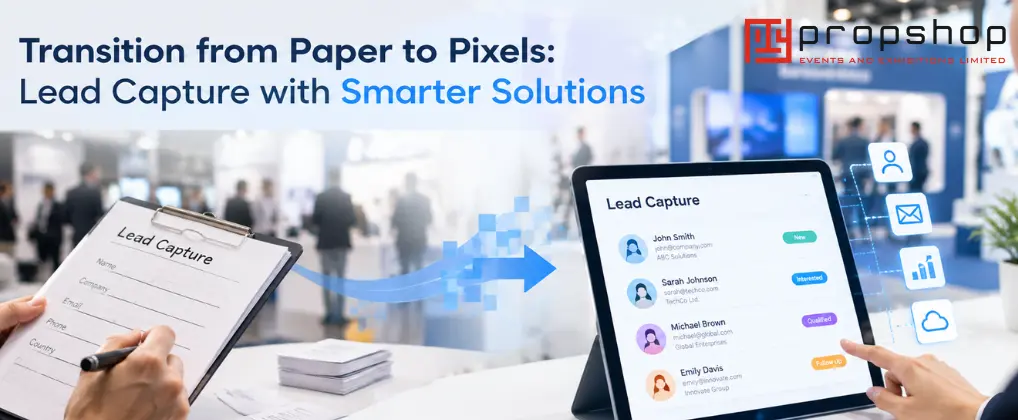
For years, exhibitors relied on paper forms, business cards and manual note-taking to collect visitor information. Today, U.S. businesses are increasingly turning to digital tools to capture leads, qualify prospects and build stronger relationships after the show. For businesses attending a trade show in the USA, collecting contact details is no longer enough.
According to a study by the U.S.-based Center for Exhibition Industry Research (CEIR), exhibitor lead capture and follow-up practices require significant improvement. The study found that 74% of exhibitors use organiser-supplied lead retrieval systems, while 59% rely on paper-based lead forms. However, only 30% of exhibitors ask qualifying questions to their visitors, highlighting a gap in effective lead engagement and qualification.
Why Most U.S. Exhibitors Do Not Want To Go Back to Manual Lead Capture
Here is why U.S. exhibitors are moving from paper to pixel for lead capture:
1. Manual Lead Capture Is Becoming a Barrier to Exhibition Success
Traditional lead collection often involves paper forms, handwritten notes and business cards. Although these methods are familiar, they can create unnecessary challenges for exhibitors managing a busy trade show exhibition booth. Visitors may not want to spend several minutes filling out forms, while sales teams can struggle to record accurate information during busy conversations. Handwritten details may be incomplete, difficult to read or disconnected from the visitor’s actual interests. Manual data collection also creates additional work after the event.
For U.S. exhibitors attending large trade shows, this can lead to delays in follow-up and missed opportunities. Digital lead capture offers a more efficient alternative. By using mobile applications, badge scanning, QR codes and connected CRM systems, businesses can reduce administrative work and focus more on meaningful visitor interactions.
2. Digital Lead Retrieval Makes Visitor Data More Actionable
One of the biggest advantages of moving from paper to digital is the ability to collect more useful information. Modern lead retrieval tools can help exhibitors capture visitor contact details, record product interests and add notes about conversations. Depending on the platform and event setup, exhibitors may also be able to access registration data, scan attendee badges and qualify prospects during the show.
For example, a visitor interested in a new industrial automation solution could be recorded as a high-priority lead, with notes about their purchasing timeline and technical requirements. Instead of relying on a business card and memory, the sales team has useful context for the next conversation.
Unlock Your Exhibit Strategy Session Today
3. AI Is Helping Exhibitors Qualify Leads More Efficiently
Artificial intelligence is becoming an important part of the digital exhibition ecosystem. While AI capabilities vary between platforms, exhibitors can use AI-supported tools to assist with lead qualification, data organization and visitor engagement. AI-powered systems may help identify patterns in visitor information, summarise conversation notes or suggest follow-up priorities based on predefined criteria.
For example, a technology company exhibiting at a U.S. industry conference may receive hundreds of visitor Inquiries. An AI-assisted system could help the sales team organise leads according to interests such as product demonstrations, pricing Inquiries, partnership opportunities or future purchasing plans. This allows teams to spend less time sorting information and more time engaging with prospects.
A visitor who appears to be a low-priority lead may still represent a valuable partnership opportunity. Sales teams should combine technology with personal judgement and genuine conversations. The strongest results come from using AI to improve efficiency while keeping the visitor experience personal.
4. Interactive Exhibition Stands Are Making Data Capture More Engaging
Lead capture does not have to feel like an administrative task. With the right exhibition stand design, businesses can make the process part of an engaging visitor experience. Interactive screens, touch panels, QR codes, digital product demonstrations and self-service information stations can encourage visitors to explore a brand while voluntarily sharing relevant information. For example, a company launching a new software platform could create an interactive product selector.
Visitors choose the features they are interested in, explore a demonstration and scan a QR code to receive additional information. This approach creates a natural connection between engagement and lead capture. Businesses working with trade show booth builders can plan these digital touchpoints from the beginning. Instead of adding technology at the last minute, exhibitors can integrate screens, charging points, lighting and visitor pathways into the overall stand concept. The result is a more cohesive exhibition experience that supports both brand visibility and business objectives.
5. CRM Integration Is Connecting Trade Show Leads to Sales
Collecting visitor information is only the first step. The real value of digital lead capture comes from what happens afterwards. When lead retrieval platforms connect with CRM systems or other marketing tools, businesses can organise information more efficiently and support structured follow-up. A visitor who requests a product brochure may receive an email after the show. A prospect interested in a sales consultation may be assigned to a relevant team member.
This creates a smoother transition from exhibition conversation to commercial opportunity. For U.S. exhibitors, CRM integration can also help sales and marketing teams measure performance more effectively. Instead of counting business cards, businesses can track metrics such as:
- Number of leads captured.
- Qualified leads generated.
- Product demonstrations completed.
- Follow-up meetings booked.
- Sales opportunities created.
However, exhibitors should always check data-sharing permissions, event policies and applicable privacy requirements before collecting or transferring visitor information.
6. Better Trade Show Booth Design Supports Digital Engagement
Technology works best when it is integrated into a well-planned physical environment. A visually attractive stand may attract visitors, but an effective exhibition space must also guide them towards meaningful interactions. This is where custom exhibition stands and custom trade show booth can offer valuable flexibility.
A business may need a welcoming reception area, a dedicated product demonstration zone, private meeting rooms and an interactive digital experience. These requirements should be considered during the early planning stages.
7. Turnkey Exhibition Stands Can Simplify Technology Integration
Managing an exhibition involves much more than designing a visually impressive space. Exhibitors must coordinate production, transportation, installation, technology and on-site support. For businesses preparing for a U.S. trade show, turnkey exhibition stands can simplify this process by bringing multiple services together through one coordinated project.
Expert booth builder may support the planning and delivery of the stand, including design, fabrication, logistics, installation and dismantling. Depending on the provider, services may also include AV equipment, digital screens, interactive features and technical coordination. This integrated approach can help reduce communication gaps between different suppliers.
Conclusion: From Lead Collection to Meaningful Business Connections
The move from paper to pixel reflects a wider change in the exhibition industry. U.S. exhibitors are increasingly focused on creating measurable, connected and engaging experiences rather than simply collecting contact details. Digital lead retrieval, AI-assisted qualification, CRM integration and interactive technology are helping businesses make better use of visitor information. At the same time, thoughtful exhibition stand design ensures that these tools are integrated into a welcoming and effective physical environment.
💬 Comments (0)
🙂 No comments yet — be the first to share your thoughts!