


2026 U.S. Guide to Sustainable Booths: Cut Costs and Waste
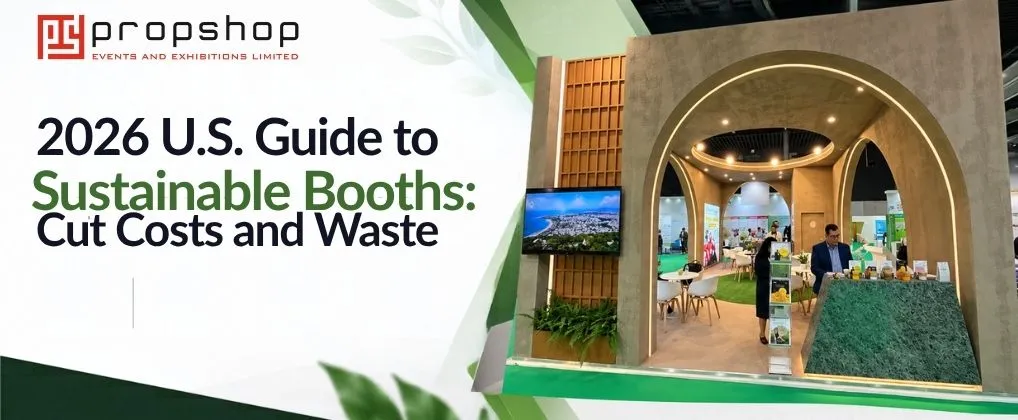
Sustainability is becoming an increasingly important consideration for U.S. exhibitors planning their 2026 event calendars. For companies exhibiting at a trade show in the USA, the challenge is to create a booth that attracts attention while reducing its environmental footprint.
A sustainable exhibit does not have to compromise on creativity, functionality, or brand impact. With thoughtful booth design, reusable structures, responsible material choices, efficient logistics, and digital solutions, exhibitors can create memorable experiences while reducing unnecessary waste.
Why Sustainable Trade Show Booths Matter in 2026
Traditional exhibition programs can involve single-use graphics, disposable flooring, temporary structures, excess packaging, and materials that are difficult to reuse. When multiplied across multiple events, these practices can result in considerable waste. The shift towards sustainable exhibiting is therefore not simply about using recycled materials. It involves designing the entire exhibition program around reuse, efficiency, durability, and responsible resource management.
How to build sustainable trade show booths?
Here is a guide to help you build sustainable trade show:
1. Design for Reuse from the Beginning
Instead of creating a completely new structure for every show, exhibitors can invest in adaptable components that can be reconfigured according to different booth sizes and floor plans. A well-planned custom trade show booth can incorporate reusable walls, lighting systems, display units, storage solutions, and structural elements.
Graphics can also be designed with flexibility in mind. Rather than permanently attaching event-specific messaging to large structural elements, exhibitors can use replaceable graphic panels or digital displays. This creates a booth system that evolves with the brand rather than being discarded after one event.
2. Choose Reusable and Recyclable Materials
Material selection has a major influence on an exhibit's environmental footprint. Exhibitors can consider reusable aluminium framing, recyclable plastics, responsibly sourced timber, fabric graphics, recycled-content materials, and other durable alternatives where appropriate. The right choice depends on the booth's design, venue requirements, transportation needs, and intended lifespan. A lifecycle approach can help businesses make more informed sustainability decisions.
Transform Your Exhibition Vision into Reality with a Booth Consultation
3. Consider Modular Exhibition Systems
Modular trade show displays can provide an effective solution for brands exhibiting at multiple events. Their flexible components can often be configured into different layouts, allowing exhibitors to adapt the same core system for various venues and booth footprints. For example, a modular system could be configured for a 10×10-foot space with a 10 x 10 trade show booth at one event and expanded or rearranged for a larger footprint at another. This adaptability can reduce the need to manufacture an entirely new exhibit for every event while also helping companies standardize their branding across their exhibition program.
4. Reduce Waste Through Smarter Graphics
Graphics are an important part of brand communication, but they can also become a significant source of waste when designed exclusively for one event. Instead of producing large quantities of date-specific printed graphics, exhibitors can use a combination of reusable branded elements and digital communication.
LED screens, digital signage, interactive displays, and replaceable fabric graphics can make it easier to update messaging without rebuilding the entire booth. This is also where interactive booth technology can support sustainability. Product demonstrations, presentations, and educational content can be delivered digitally.
5. Make Digital Engagement Part of the Booth
Going paperless can reduce more than just printed brochures. It can also streamline how visitors interact with the brand. QR codes can provide access to product information, technical specifications, brochures, videos, case studies, and contact forms. Touchscreens can allow visitors to explore product portfolios or customise demonstrations according to their interests. When used strategically, interactive booth technology can reduce printed materials while creating a more engaging visitor experience. Every screen, interactive display, or digital feature should have a clear purpose.
6. Consider Rental When It Makes Sense
For businesses attending a limited number of events, entering a new market, or testing a particular exhibition strategy, trade show booth rental can provide a flexible alternative. Rental solutions can allow exhibitors to access professional structures and design elements without permanently owning every component. When rental systems are reused across multiple customers or events, they can potentially extend the useful life of exhibition assets. The right choice between purchasing and renting depends on event frequency, branding requirements, booth size, and long-term objectives.
Unlock Your Exhibit Strategy Session Today
7. Work With an Experienced Exhibition Partner
Sustainability is easier to implement when it is incorporated into the project from the beginning rather than added just before the show. An experienced trade show booth design agency in the USA can help exhibitors evaluate materials, booth structures, graphics, lighting, logistics, storage, and reuse opportunities during the design stage. A specialist booth builder can make a trade show booth that balances sustainability with brand visibility, visitor flow, product presentation, meeting areas, storage, and lead-generation requirements.
8. Build Sustainability Into Your Booth Strategy
For exhibitors planning several events, sustainability should become a program rather than a one-off project. A trade show booth builder can develop a reusable exhibition system that evolves throughout the year. For example, the core structure can remain consistent while graphics, product displays, meeting areas, and digital content are modified for individual events. This approach can also make future planning easier. Once the core system is established, teams can identify which components should be stored, refurbished, replaced, or redesigned before the next event.
Creating a Sustainable Booth Without Sacrificing Impact
Sustainable exhibiting does not mean creating a plain or forgettable booth. Modern trade show booth design can combine premium aesthetics with reusable structures, digital experiences, energy-efficient lighting, responsible materials, and smart space planning. Similarly, turnkey exhibits can be planned around efficient logistics, reusable components, and streamlined installation and dismantling.
Whether a company chooses a permanent exhibit, trade show booth rental, or modular trade show displays, the most important consideration is how each component will be used throughout its lifecycle. The role of a booth builder is increasingly about more than fabrication. It is about helping exhibitors create flexible, durable, and strategically planned environments that support both brand objectives.
The Road Ahead for U.S. Exhibitors
In 2026, sustainability is becoming part of a broader conversation about how businesses plan, build, transport, operate, and reuse their exhibition assets. Companies do not necessarily need to redesign everything at once. Small improvements across materials, graphics, logistics, technology, and reuse can collectively make a meaningful difference.
Conclusion
The strongest sustainable exhibition strategies begin before production starts. By partnering with a capable trade show booth design agency in the USA, exhibitors can evaluate opportunities to minimize waste while developing an engaging environment for visitors. Propshop is a reliable trade show booth builder in the USA that can help you build a sustainable booth. Ultimately, the objective is not simply to build a greener booth. It is to build a smarter exhibition program that can deliver memorable brand experiences while using resources more efficiently and creating value across multiple events.
💬 Comments (0)
🙂 No comments yet — be the first to share your thoughts!