


Venue Rules Every Exhibitor Should Know Before Building a Trade Show Booth
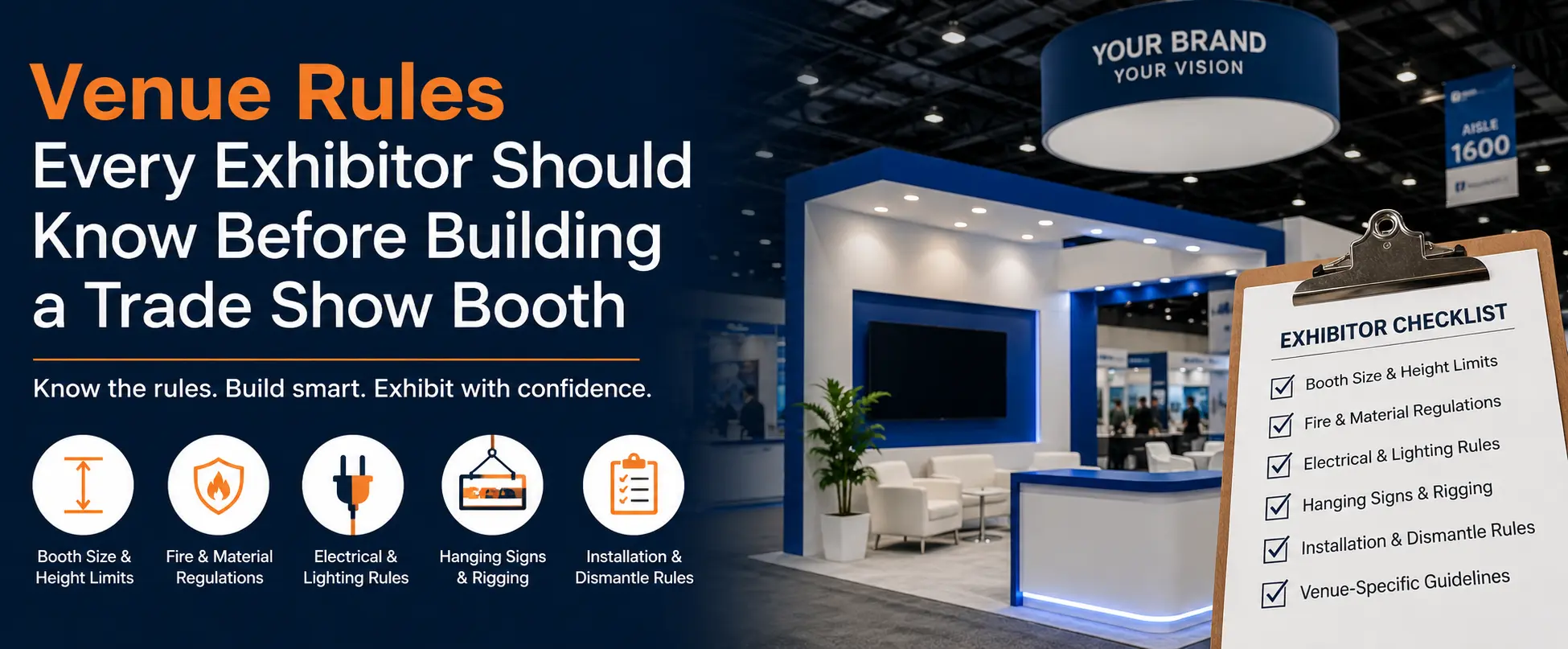
Exhibiting at a trade show in the USA can be a powerful opportunity to showcase your brand, connect with qualified prospects, and generate valuable business leads. However, every convention center and event organizer has specific rules covering dimensions, materials, electrical installations, signage, fire safety, and installation procedures.
Ignoring these requirements can result in costly modifications, delays, additional fees, or even restrictions on your booth setup. That is why exhibitors should understand venue regulations before finalizing their trade show exhibition booth. From choosing the right materials to coordinating electrical services, knowing the rules is very important.
Why Venue Rules Matter Before Manufacturing Your Booth
US trade show venues operate under detailed exhibitor guidelines. These rules are designed to maintain safety, accessibility, and smooth traffic flow across the exhibition floor. Requirements can vary significantly depending on the venue, event, booth size, and location within the hall. For example, a standard inline booth may have different height restrictions from a peninsula or island booth. Hanging signs may require advance approval, while rigging may only be permitted in designated areas.
Common Venue Rules in Most USA Trade Shows
Here are some common rules for trade shows in most of the venues in the USA:
1. Check Booth Size and Height Restrictions
One of the first things exhibitors should confirm is the permitted booth footprint and height. Most US exhibitions divide floor space into categories such as inline, corner, peninsula, and island booths.
Each category can have different rules regarding:
- Maximum overall height
- Back-wall height
- Side-wall height
- Product display height
- Hanging signs
- Visibility between neighbouring booths
Always review the event's official exhibitor manual and floor plan. Your booth design for trade shows should be developed around these limitations from the beginning rather than modified after manufacturing has started.
2. Understand Fire and Material Regulations
Fire safety is a major consideration when constructing exhibition booths in the United States. Venues may have specific requirements concerning fabrics, carpeting, decorative materials, plastics, wood treatments, drapes, and other booth components. Many venues require certain materials to be flame-retardant or appropriately treated to meet applicable fire-safety standards.
Industry associations such as the Exhibition Services & Contractors Association (ESCA) and the International Association of Exhibitions and Events (IAEE) provide industry guidance and resources that can help exhibitors, contractors, and suppliers understand safety, compliance, and operational expectations within the U.S. exhibitions industry. However, requirements can vary by venue, city, state, and event, so exhibitors should always verify the specific regulations applicable to their show.
Transform Your Exhibition Vision into Reality
3. Follow Electrical and Lighting Guidelines
Lighting can transform an exhibition space, but electrical installations must follow venue regulations.
Exhibitors should confirm requirements for:
- Power connections
- Extension cords
- Distribution systems
- Lighting fixtures
- LED installations
- Electrical inspections
- Authorized electrical contractors
Large LED walls, interactive displays, touchscreens, product demonstration systems, refrigerators, computers, and other equipment can significantly increase your booth’s power requirements. If you are planning an interactive trade show booth, your design team should account for the electrical load of all technology and equipment during the early planning stage. This allows the appropriate power connections, cabling, and technical infrastructure to be arranged with the venue in advance.
4. Know the Rules for Hanging Signs and Rigging
Large suspended signs can make your booth visible from across a crowded exhibition hall. However, hanging structures are subject to strict venue and show-management requirements.
Rules may specify:
- Maximum sign dimensions
- Maximum hanging height
- Structural weight limits
- Approved rigging contractors
- Engineering documentation
Some venues do not permit exhibitors to perform their own rigging. Advance approval may also be necessary. If your concept includes a suspended sign, confirm these requirements before manufacturing the structure. This ensures your trade show exhibition booth can be installed safely and according to venue specifications.
5. Review Installation and Dismantling Rules
Manufacturing is only one part of the exhibition process. Venues also establish rules for move-in, installation, dismantling, and move-out.
Exhibitors should check:
- Freight delivery procedures
- Material-handling requirements
- Labor regulations
- Installation badges
- Dismantling schedules
Your trade show booth design agency in the USA should coordinate production and logistics around these deadlines to minimize last-minute complications.
6. Check Signage and Branding Regulations
Your booth signage is essential for attracting visitors, but venues may impose restrictions on where and how signs can be displayed.
Before production, verify requirements for:
- Logo placement
- Sign dimensions
- Digital displays
- Hanging signs
- Promotional messaging
- Neighboring booth visibility
7. Consider Audio, Demonstrations, and Interactive Technology
Interactive experiences can significantly increase engagement, but they may create additional venue considerations. If your booth includes speakers, demonstrations, machinery, screens, or other technology, check whether the event has restrictions relating to noise, lighting, moving equipment, demonstrations, or visitor queues. For example, a product demonstration that attracts a large crowd should not block aisles or interfere with neighboring exhibitors.
8. Understand Venue-Specific Labor Requirements
Many US convention venues have exclusive or preferred service providers for certain tasks, including electrical work, rigging, material handling, plumbing, and sometimes booth installation. Exhibitors should determine which services must be performed by venue-appointed contractors and which can be handled by their own exhibition partner. Understanding these rules early helps you build an accurate project budget and prevents unexpected labor charges.
Build a Compliant Booth Without Sacrificing Creativity
Venue regulations should not limit creativity. Instead, they provide the framework within which an effective exhibition experience can be developed. The best booth concepts combine strong visual branding, strategic visitor flow, functional meeting areas, engaging displays, appropriate lighting, and compliant construction. When these elements are considered together, exhibitors can create a professional environment that attracts attention while meeting venue expectations.
Whether you are preparing for a major industry exhibition or a smaller regional event, partnering with an experienced trade show booth builder can simplify the process from concept and 3D visualization through manufacturing, logistics, installation, and dismantling.
Conclusion
Preparing a trade show booth for a US event requires careful planning beyond aesthetics. By reviewing venue regulations before manufacturing begins, exhibitors can reduce unexpected costs, avoid compliance issues, and create a smoother installation experience. Most importantly, effective booth design for trade shows starts with understanding the environment in which the booth will operate.
When creative design is combined with careful compliance planning, your exhibition presence can make a strong impression while delivering a safe, accessible, and memorable experience for visitors. Working with an experienced trade show booth builder can help identify these requirements early and incorporate them into the design and production process.